Passa ai contenuti principali

Your Weekend Reading: China Clouds American Earnings
Get caught up.

By

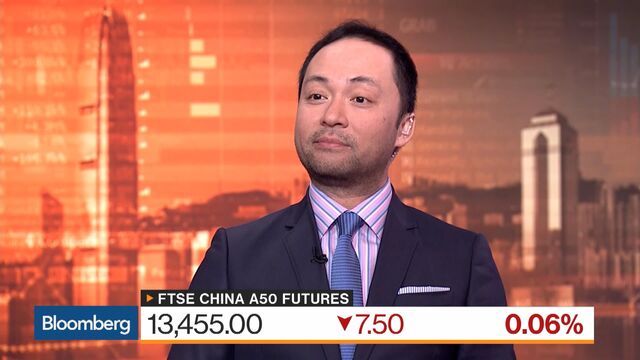
Time to take some of the gains off the table in China, says Eastspring's Ken Wong.

Want to receive a daily news briefing, including this weekend edition, in your inbox every day? Sign up here

The earnings flood from U.S. industrials suggests trouble ahead, mostly thanks to China—where the world's top-performing stock market is looking a bit shaky. 3M shares fell the most since 1987 (remember Black Monday?) after the maker of Post-It notes slashed its outlook. Ford beat forecasts, but still lost money in—you guessed it—China. Starbucks, however, couldn't complain.

What you'll want to read this weekend

An Amazon team that reviews commands to Alexa can also access location data, potentially including where you live

Millennials tried to kill the American mall. Generation Z might save itBloomberg Businessweek reports. But in Europe and Japan, will this younger cohort actually buy anything new?

Facebook said it's trying to police itself during India's elections—with a handful of contract fact-checkers for the nation's 1 billion voters.

A woman says she was already a target for men at Cantor Fitzgerald—and then one of them did something disgusting to her coffee mug.

Unsold luxury homes are piling up in the Hamptons. Listings for these lavish vacation retreats on eastern Long Island have tripled from last year.

What you'll need to know next week

  • The Fed meets with low inflation on its mind
  • It's another week for major earnings, including Apple and Google.
  • Berkshire Hathaway investors should prep for big buybacks.
  • Spain goes to the polls Sunday, and Catalonia is the central issue.
  • A Japanese emperor will abdicate for the first time in 202 years.

What you'll want to read in Bloomberg Pursuits

The ultimate badge of wealth—the private jet—has been getting ever-more expensive and impractical. So a new generation of business models has blossomed for the top-tier jet-set: prepaid cards to book one; share purchases; an app that gets you a non-commercial seat; and a burgeoning charter business. All are options for when first-class isn't good enough.

Commenti

Post popolari in questo blog

Charting the World Economy: The U.S. Jobs Market Is On Fire - Bloomberg

Charting the World Economy: The U.S. Jobs Market Is On Fire - Bloomberg https://www.bloomberg.com/news/articles/2019-12-06/charting-the-world-economy-the-u-s-jobs-market-is-on-fire Charting the World Economy: The U.S. Jobs Market Is On Fire Zoe Schneeweiss Explore what's moving the global economy in the new season of the Stephanomics podcast. Subscribe via  Apple Podcast , Spotify or  Pocket Cast . The last U.S. payrolls report of the decade was a doozy, beating expectations and doing its bit to keep the consumer in good health heading into 2020. That's good news given the various pressures still weighing on global growth. Here's some of the charts that appeared on Bloomberg this week, offering a pictorial insight into the latest developments in the global economy. U.S. Advertisement Scroll to continue with content ...

Fwd: The Looming Bank Collapse The U.S. financial system could be on the cusp of calamity. This time, we might not be able to save it.

After months  of living with the coronavirus pandemic, American citizens are well aware of the toll it has taken on the economy: broken supply chains, record unemployment, failing small businesses. All of these factors are serious and could mire the United States in a deep, prolonged recession. But there's another threat to the economy, too. It lurks on the balance sheets of the big banks, and it could be cataclysmic. Imagine if, in addition to all the uncertainty surrounding the pandemic, you woke up one morning to find that the financial sector had collapsed. You may think that such a crisis is unlikely, with memories of the 2008 crash still so fresh. But banks learned few lessons from that calamity, and new laws intended to keep them from taking on too much risk have failed to do so. As a result, we could be on the precipice of another crash, one different from 2008 less in kind than in degree. This one could be worse. John Lawrence: Inside the 2008 financial crash The financial...

Another Paradox: Consumer Spending Expectations Surge, Despite Dismal Income, Earnings

Call it the latest economic paradox. Despite widespread stories of doom and gloom about the state of US consumer finances once the fiscal stimulus bill expires on Dec 31, the latest NY Fed survey of consumer expectations unexpectedly shows that US consumers have little intention of slowing down their spending. In fact, and very paradoxically,  despite depressed and flat income and earnings growth expectations,  with median one-year ahead expected earnings growth at 2.0% for fifth consecutive month and expected income growth barely little changed at 2.14% ... ...  consumers' 1-year ahead  spending growth expectations  jumped to 3.73% over the next 12 months in November  - the highest level in more than four years, not only up from the 3.06% in the previous month but a whopping 33% more than the 2.8% reported last November,  making this the biggest Y/Y increase in expected spending in series history. This bizarre increase took place even as labor market signals were mixed: although t...