Passa ai contenuti principali

US Retail Sales Crash By Most Ever In March, Despite Hoarding

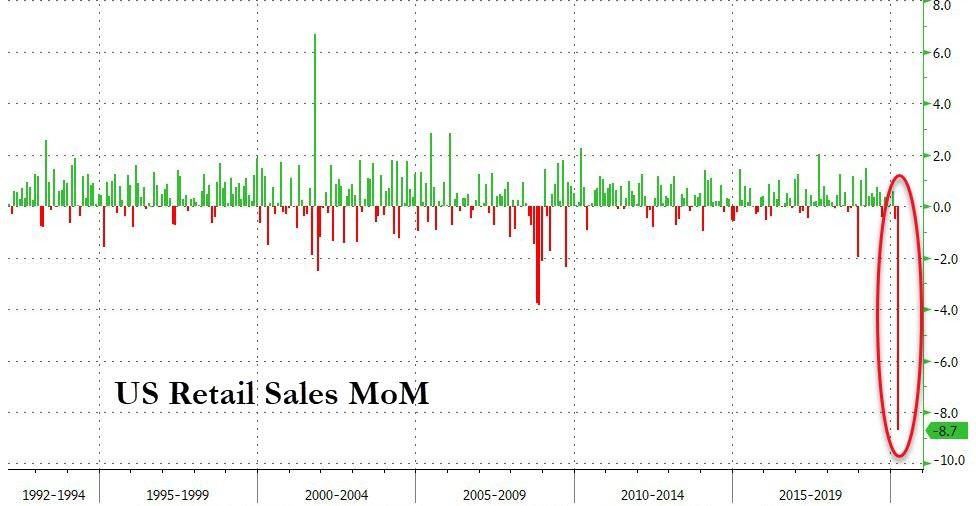
While it is not entirely surprising given that practically all of America is under lockdown and the consumption-focused services sector is particularly distressed, US retail sales crashed 8.7% MoM in March (against expectations of a 8.0% drop)
Source: Bloomberg

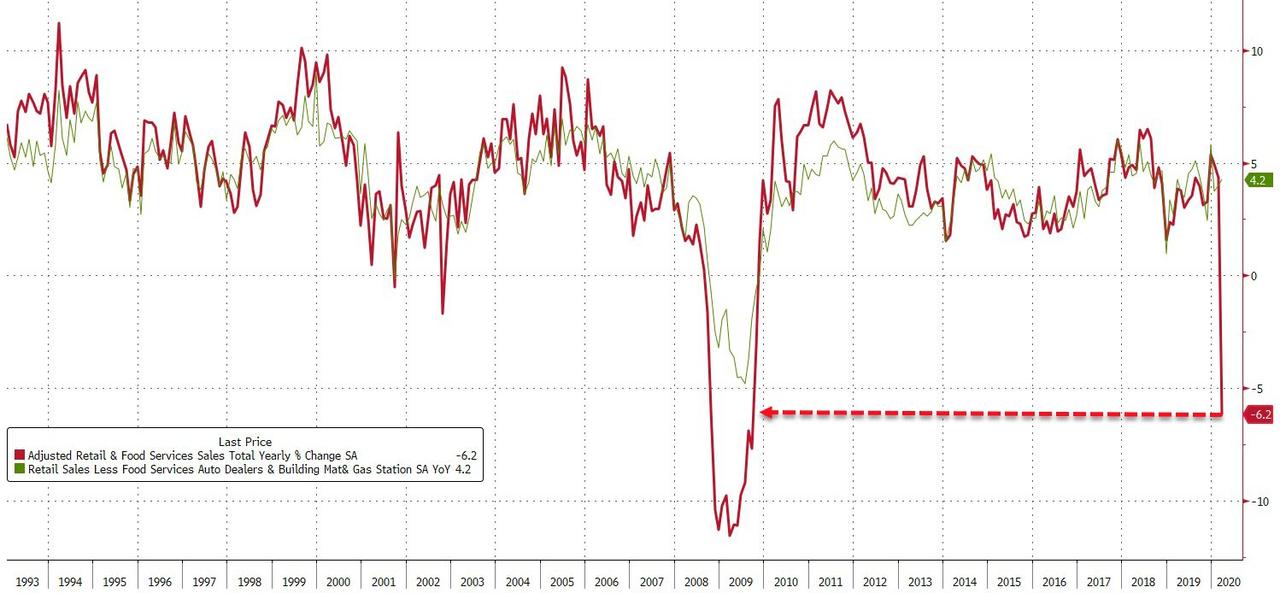
Year-over-year, headline retail sales crashed 6.2% - the biggest drop since Sept 2009...
Source: Bloomberg

Ex-Autos dropped 4.5% MoM (slightly better than expected) and Ex-Autos-and-Gas dropped 3.1% MoM (again slightly better than expected, and the Control Group (that is used for GDP calculation purposes), somehow managed a 1.7% MoM rise (against expectations of 2.0% drop). The driver appears to be 'hoarding' as food and beverage and health stores saw huge rises in sales...
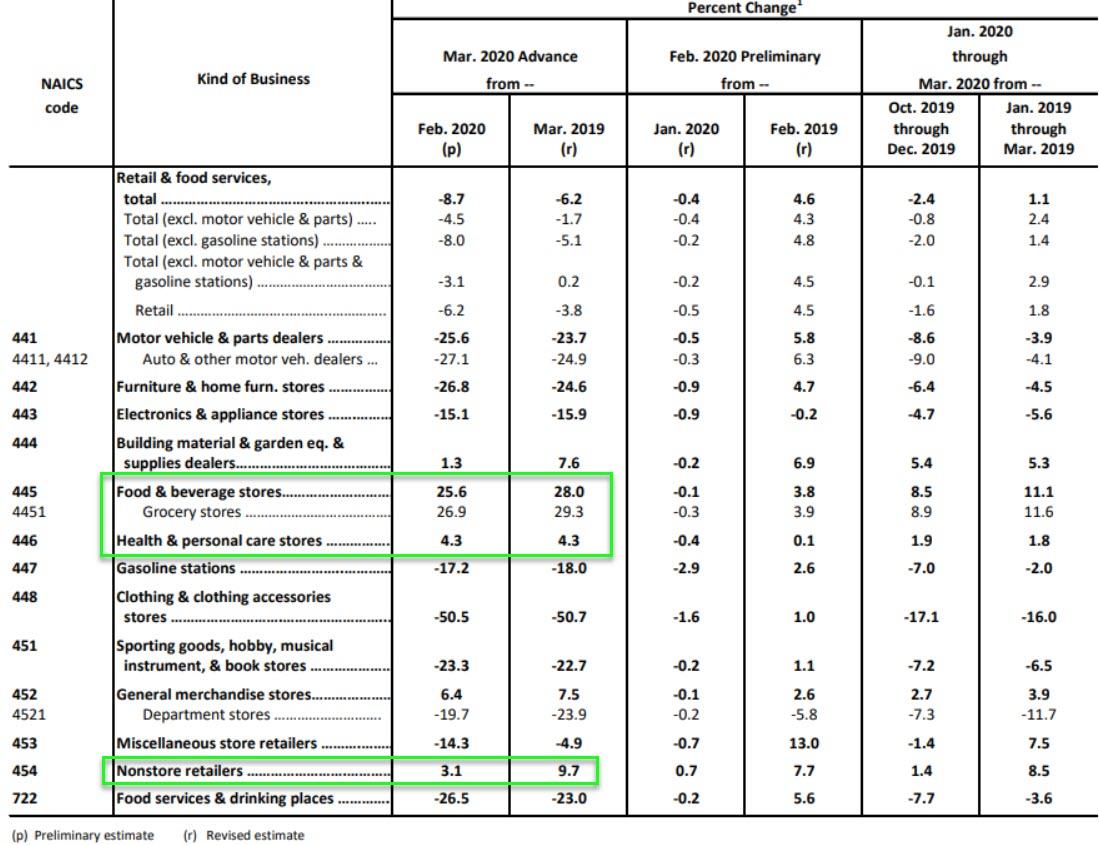
This was the biggest MoM surge in Food & Beverage store sales ever...
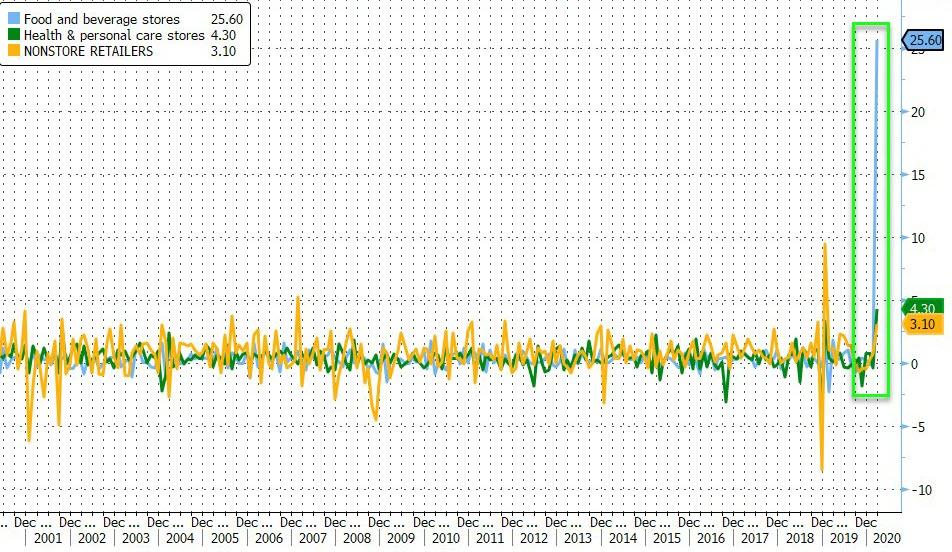
Source: Bloomberg

But the scale of hoarding in Food & Beverage is offset by the utter devastation across so many other sectors...
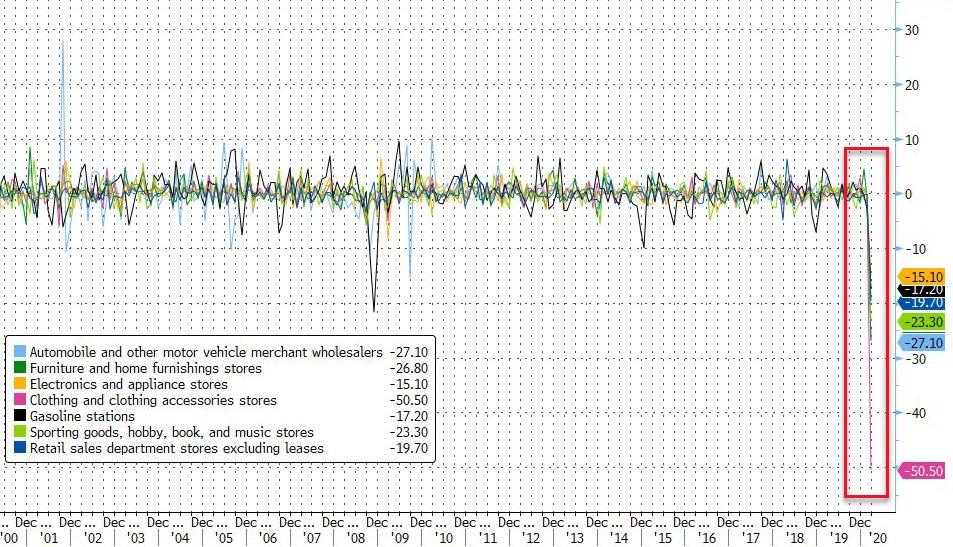
Source: Bloomberg

How long can that lift last? We would be worried about April's data.

Commenti

Post popolari in questo blog

Charting the World Economy: The U.S. Jobs Market Is On Fire - Bloomberg

Charting the World Economy: The U.S. Jobs Market Is On Fire - Bloomberg https://www.bloomberg.com/news/articles/2019-12-06/charting-the-world-economy-the-u-s-jobs-market-is-on-fire Charting the World Economy: The U.S. Jobs Market Is On Fire Zoe Schneeweiss Explore what's moving the global economy in the new season of the Stephanomics podcast. Subscribe via  Apple Podcast , Spotify or  Pocket Cast . The last U.S. payrolls report of the decade was a doozy, beating expectations and doing its bit to keep the consumer in good health heading into 2020. That's good news given the various pressures still weighing on global growth. Here's some of the charts that appeared on Bloomberg this week, offering a pictorial insight into the latest developments in the global economy. U.S. Advertisement Scroll to continue with content ...

China Exports, Imports Fall Sequentially, Adding To Slowdown Fears

China's exports rose 19.3% y/y in July, missing the median consensus expectation of 20% (ranging from 15.4% to 30.7%), and declining sequentially -0.3% in July after rising +5.7% in June. Imports also rose less than expected, up 28.1% Y/Y in July, below the 33.3% median expectation, and fell 6.4% sequentially after surging +11.3% M/M in June. As a result this disproportional slowdown in imports vs exports, China's monthly trade surplus actually rose to $56.6bn in July, slightly better than the $53.3BN consensus, and up from $51.5BN in June due to the bigger miss in imports. ASEAN was China's biggest trading partner in July, followed by the Europe Union and the U.S., customs data showed. China's exports to the US grew 13.4% in July from a year ago, while imports from America rose 25.6%, leaving a trade surplus of $35.4 billion in the month. Some more details: By geography:  Export growth slowed across major export destinations, and exports to major DMs continued to be a ...