Passa ai contenuti principali

S&P Downgrades Ford To Junk - Biggest Fallen Angel Yet

Given where Ford's CDS was trading - more in line with B1/BB- rated American Axle - it should hardly come as a surprise that S&P has finally bitten the bullet and downgraded Ford debt to junk.
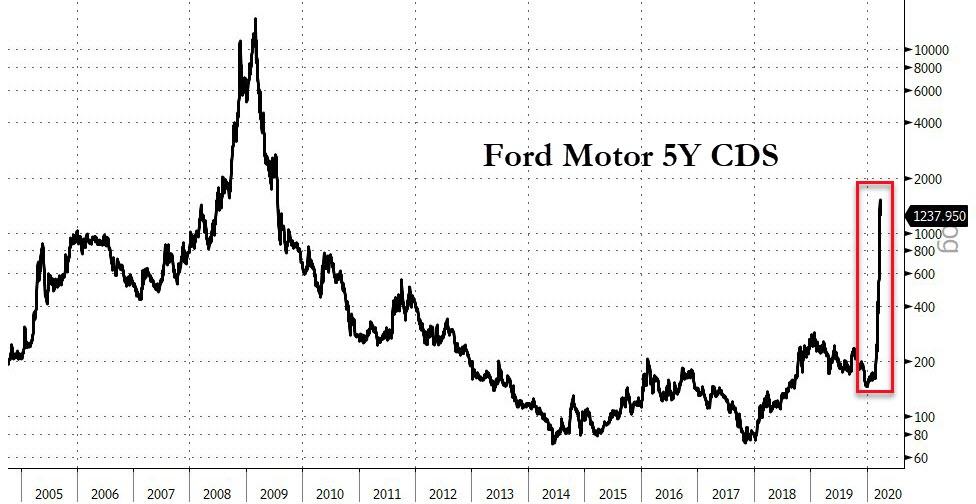
Via S&P,

The decision to downgrade Ford Motor Co. from investment grade to speculative grade reflects that the company's credit metrics and competitive position became borderline for the investment-grade rating prior to the coronavirus outbreak, and the expected downturn in light-vehicle demand made it unlikely that Ford would maintain the required metrics.

Ford Motor Co. announced it is suspending production at its manufacturing sites in Europe for four weeks and halting production in North America to clean these facilities and boost containment efforts for the COVID-19 coronavirus. We expect Ford's EBITDA margin to remain below 6% on a sustained basis and believe that its free operating cash flow to debt is unlikely to exceed 15% on a consistent basis.

Ford has drawn $13.4 billion on its corporate credit facility and $2 billion on its supplemental credit facility. We believe the company's current cash position stands at about $36 billion.

We are downgrading our long-term issuer credit rating to 'BB+' from 'BBB-'. At the same time, we are assigning issue-level ratings of 'BB+' on Ford's unsecured debt.

We are also placing the ratings on CreditWatch with negative implications, which reflects at least a 50% chance that we could lower the ratings depending on factors such as the duration of the plant shutdowns, the rate of cash burn, and the adequacy of Ford's liquidity position.

Ford Extends Production Shut Down Due To Coronavirus

This S&P move follows Moody's cutting Ford's long-term corporate family rating to Ba2 from Ba1 earlier in the day.

With a total amount of public bonds & loans outstanding around $95.8 billion, according to data compiled by Bloomberg, Ford has just become one of the largest fallen angels yet
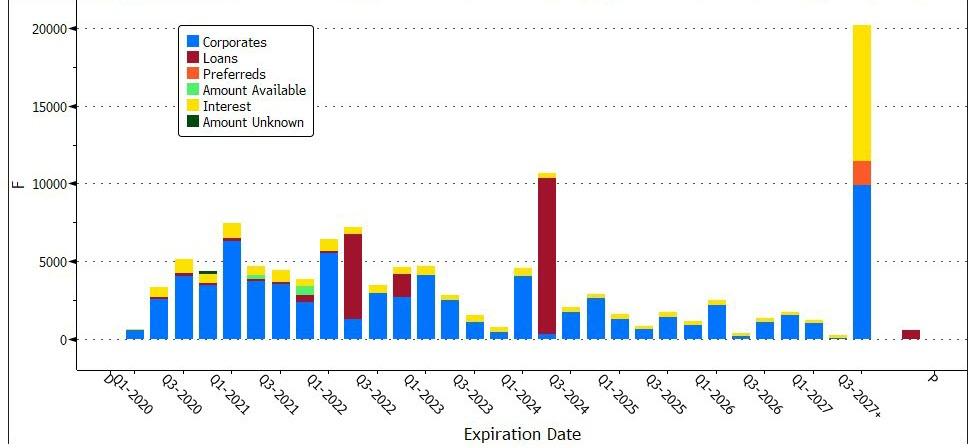
Will this sudden large fallen angel lead to further repricing in the junk bond market, just as the market is dead-cat-bouncing on Fed intervention?

Perhaps of most note, the downgrade to junk means - we think - that this disqualifies Ford debt from The Fed's corporate-bond-buying bandwagon - which is likely to make the cliff for Ford debt even more dramatic (especially after rallying so hard the last two days).

Commenti

Post popolari in questo blog

Charting the World Economy: The U.S. Jobs Market Is On Fire - Bloomberg

Charting the World Economy: The U.S. Jobs Market Is On Fire - Bloomberg https://www.bloomberg.com/news/articles/2019-12-06/charting-the-world-economy-the-u-s-jobs-market-is-on-fire Charting the World Economy: The U.S. Jobs Market Is On Fire Zoe Schneeweiss Explore what's moving the global economy in the new season of the Stephanomics podcast. Subscribe via  Apple Podcast , Spotify or  Pocket Cast . The last U.S. payrolls report of the decade was a doozy, beating expectations and doing its bit to keep the consumer in good health heading into 2020. That's good news given the various pressures still weighing on global growth. Here's some of the charts that appeared on Bloomberg this week, offering a pictorial insight into the latest developments in the global economy. U.S. Advertisement Scroll to continue with content ...

Fwd: The Looming Bank Collapse The U.S. financial system could be on the cusp of calamity. This time, we might not be able to save it.

After months  of living with the coronavirus pandemic, American citizens are well aware of the toll it has taken on the economy: broken supply chains, record unemployment, failing small businesses. All of these factors are serious and could mire the United States in a deep, prolonged recession. But there's another threat to the economy, too. It lurks on the balance sheets of the big banks, and it could be cataclysmic. Imagine if, in addition to all the uncertainty surrounding the pandemic, you woke up one morning to find that the financial sector had collapsed. You may think that such a crisis is unlikely, with memories of the 2008 crash still so fresh. But banks learned few lessons from that calamity, and new laws intended to keep them from taking on too much risk have failed to do so. As a result, we could be on the precipice of another crash, one different from 2008 less in kind than in degree. This one could be worse. John Lawrence: Inside the 2008 financial crash The financial...

Another Paradox: Consumer Spending Expectations Surge, Despite Dismal Income, Earnings

Call it the latest economic paradox. Despite widespread stories of doom and gloom about the state of US consumer finances once the fiscal stimulus bill expires on Dec 31, the latest NY Fed survey of consumer expectations unexpectedly shows that US consumers have little intention of slowing down their spending. In fact, and very paradoxically,  despite depressed and flat income and earnings growth expectations,  with median one-year ahead expected earnings growth at 2.0% for fifth consecutive month and expected income growth barely little changed at 2.14% ... ...  consumers' 1-year ahead  spending growth expectations  jumped to 3.73% over the next 12 months in November  - the highest level in more than four years, not only up from the 3.06% in the previous month but a whopping 33% more than the 2.8% reported last November,  making this the biggest Y/Y increase in expected spending in series history. This bizarre increase took place even as labor market signals were mixed: although t...